
 ai-PULSE 2026 · 13 October 2026 · Station F, Paris · ai-pulse.eu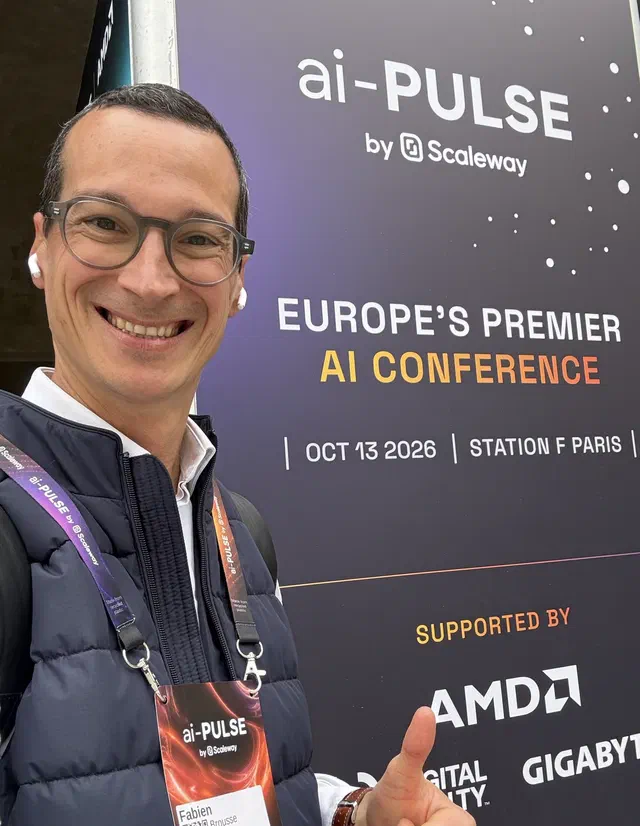
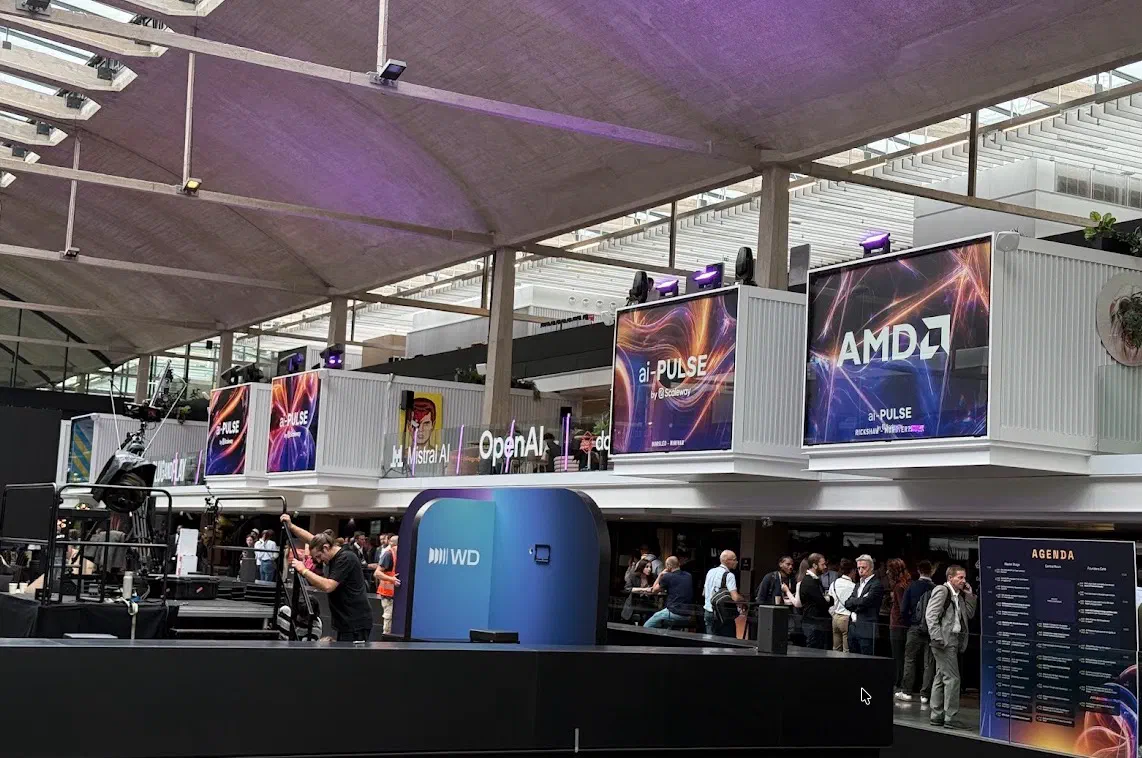
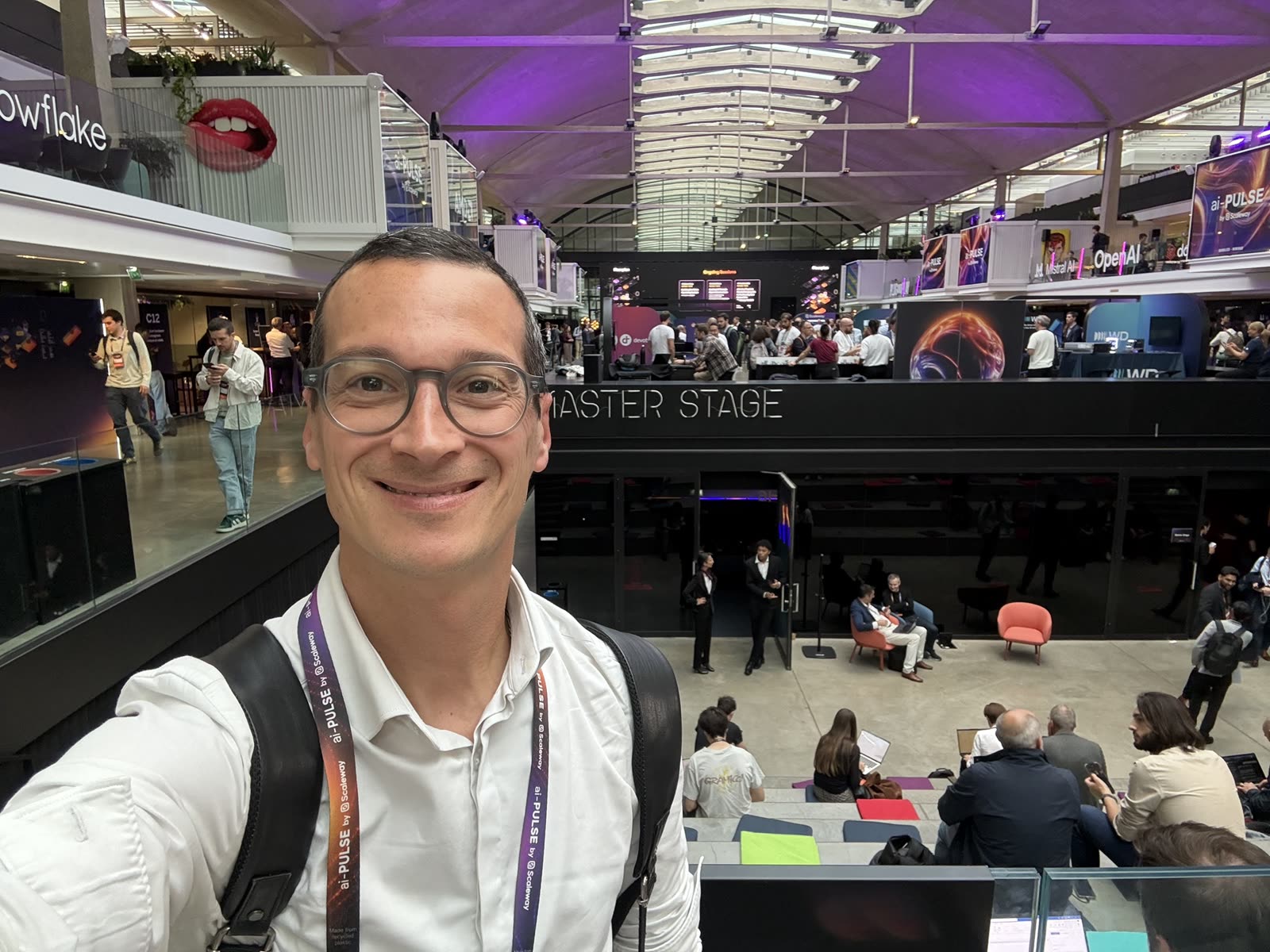
ai-PULSE, Scaleway’s AI conference, took place on 13 October 2026 at Station F in Paris. One day, one main stage in the middle of the hall, and an openly stated common thread: European sovereignty.
I went with two questions. What is being done in France and in Europe on sovereign AI? And how are software teams scaling up with AI? In the background, a third one: what can be reused for a cybersecurity product built on agents.
Getting there
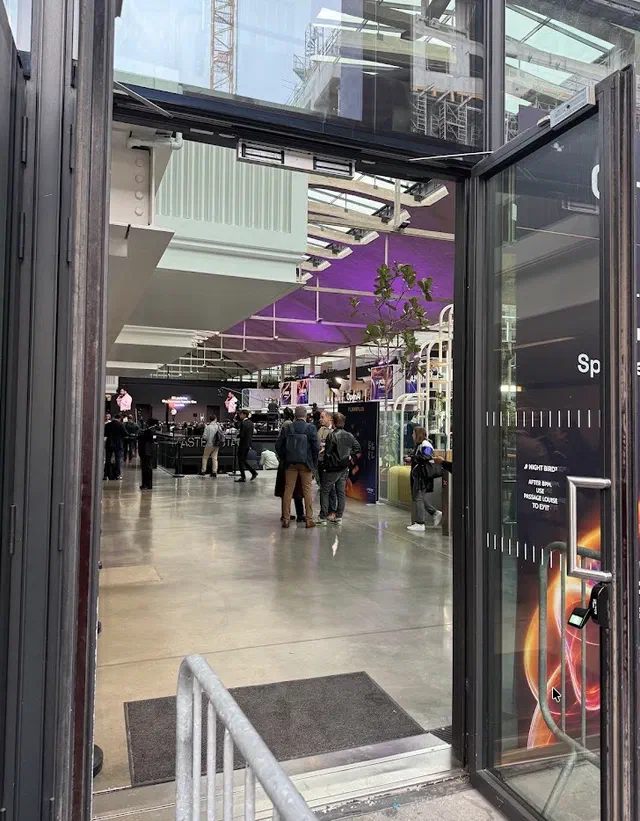
I came by train the same morning. Station F is about thirty minutes from the Gare du Nord. There was a queue to get in, so I started following the keynote live on my phone while waiting in line.
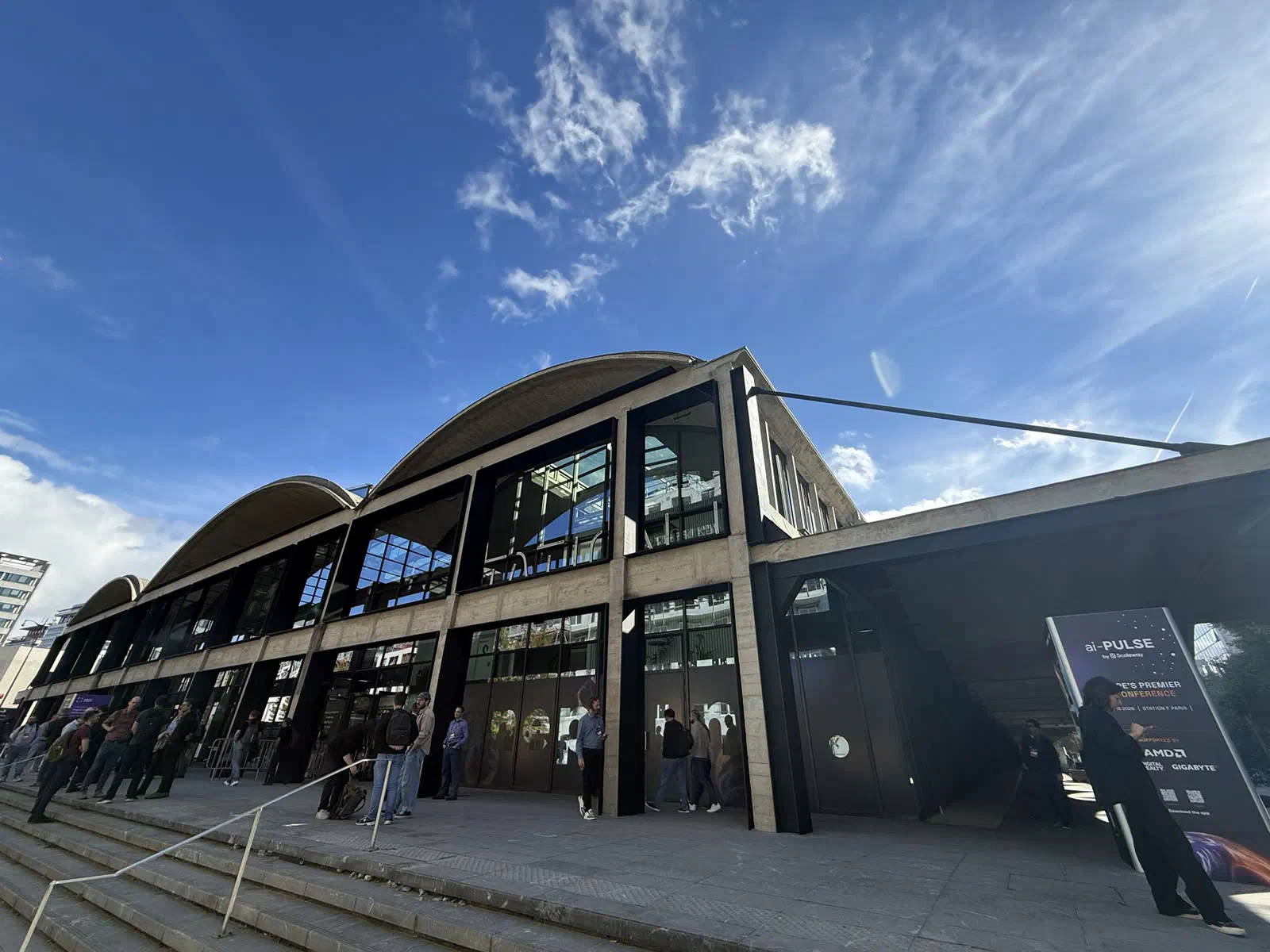
The venue is worth the trip. Station F occupies the Halle Freyssinet, built in the late 1920s for rail freight at the Gare d’Austerlitz. Xavier Niel, founder of iliad, Scaleway’s parent company, turned it into a start-up campus, which opened in 2017.
It reminded me of EuraTechnologies in Lille: the same idea of putting digital businesses in a converted industrial building. There, it is the former Le Blan-Lafont cotton mill, opened in 2009.
The opening keynote
Two hours, available as a replay on YouTube. Four blocks: open source AI, hardware and infrastructure, AI for science, then physical AI and robotics. All paced by the day’s three themes, presented as three keyboard keys: ENTER, SHIFT, CTRL. The last one, keeping control over who runs the model, where the data goes and what an agent can access, carried the announcements.
First figure, given by Scaleway: consumption of AI services on its platform grew thirtyfold in twelve months.
Open weight, and everything around the model
There was a lot of talk about open models and open weights. The first speaker, Raffi Krikorian, CTO of Mozilla, showed that the model is no longer the problem. The gap between open and closed models is around 3%. What holds things back is everything you need around a model to run it: evaluations, observability, on-call, compliance, auditing. With a closed provider, a credit card is enough.
That tooling is starting to arrive in open source, to make all of this less difficult. He cited OpenCode, Goose, OpenHands, and Thunderbolt, Mozilla’s open source AI client that you host yourself. He works at Mozilla, so he is making his own case. But his figure speaks for itself: on TerminalBench, with the same model, changing the harness gives a 22% gain on coding tasks.
Mistral then came to present Le Chonk, its new large model, with weights announced for the end of October. The general manager of Alibaba Europe talked about Qwen, with the same arguments in favour of open weights.
Scaleway’s announcements
New regions. Milan goes into production with its second and third availability zones. Stockholm and Frankfurt will follow in 2027, with three zones each. For a hosting provider or a software vendor, that means more choice for locating a customer’s data without leaving the European Union.
GPUs in Europe. Scaleway is opening dedicated GPU zones: thousands of Nvidia B300s in Copenhagen, and in Sweden a supercomputer with 696 AMD Instinct MI355X. With Paris, that makes three zones. It was the most concrete attempt of the day to close Europe’s computing capacity gap. The partnership with AMD also brings an alternative to an all-Nvidia setup.
Sovereignty, with its limits. Damien Lucas, Scaleway’s CEO, said it himself: Scaleway’s services do not run on European hardware. Hence a partnership with VSORA, a French start-up, for inference on European chips. For now, sovereignty is about where the computing runs and who operates it, not about the silicon.
Three new models. GLM 5.3 from Z.ai, DeepSeek V4.1 Flash, which now understands images, and LightOn OCR 3, a character recognition model from the French company LightOn. They join more than 40 models in the catalogue. Two Chinese models and one French, served from Europe: where a model comes from matters less than where it runs.
Two more forward-looking topics. Qall, an open source SDK that orchestrates a single workflow across CPUs, GPUs and quantum processors. And a partnership with Alatyr to study data centres in space.
→ Sovereignty and open models: the common thread of ai-PULSE 2026
AI in biology
This was the part I liked best. Two start-ups, two scales of living things.
Bioptimus trains foundation models on biological data rather than text. One example: the image of a cancer biopsy. It fits on a microscope slide, but weighs around thirty gigabytes once digitised. The model derives a representation of the patient from it, used to predict the response to a treatment or to assess how severe the tumour is. The data comes from partner hospitals, so from real patients.
Living Models works on the genome, starting with plants, because a discovery reaches the market faster there. Their example: a tomato virus with no solution to date. In the lab, finding the part of the genome that makes a plant resistant takes ten years on average. Their model gives a fast answer and saves years of field trials. Everything is published as open source and open weight.
Outside my area, but it is the most telling illustration of the sovereignty argument: data you send nowhere.
The morning ended with physical AI and robotics, with researchers from Tübingen and Inria.
Inference economics
AMD gave the most concrete demonstration of the day: how much a GPU serving an open weight model earns, and under what conditions. With an uncomfortable figure: according to AMD, at some operating points, some of the most expensive systems on the market run at a loss.
Nokia came at it from another angle, the network. The ability to use the available GPUs depends on the speed of the network. Their answer: fibre everywhere, from the switch silicon to as close as possible to the endpoint, through the rack and the cabinet. Copper no longer keeps up.
→ Inference economics: why the GPU is not the point
Agent identity
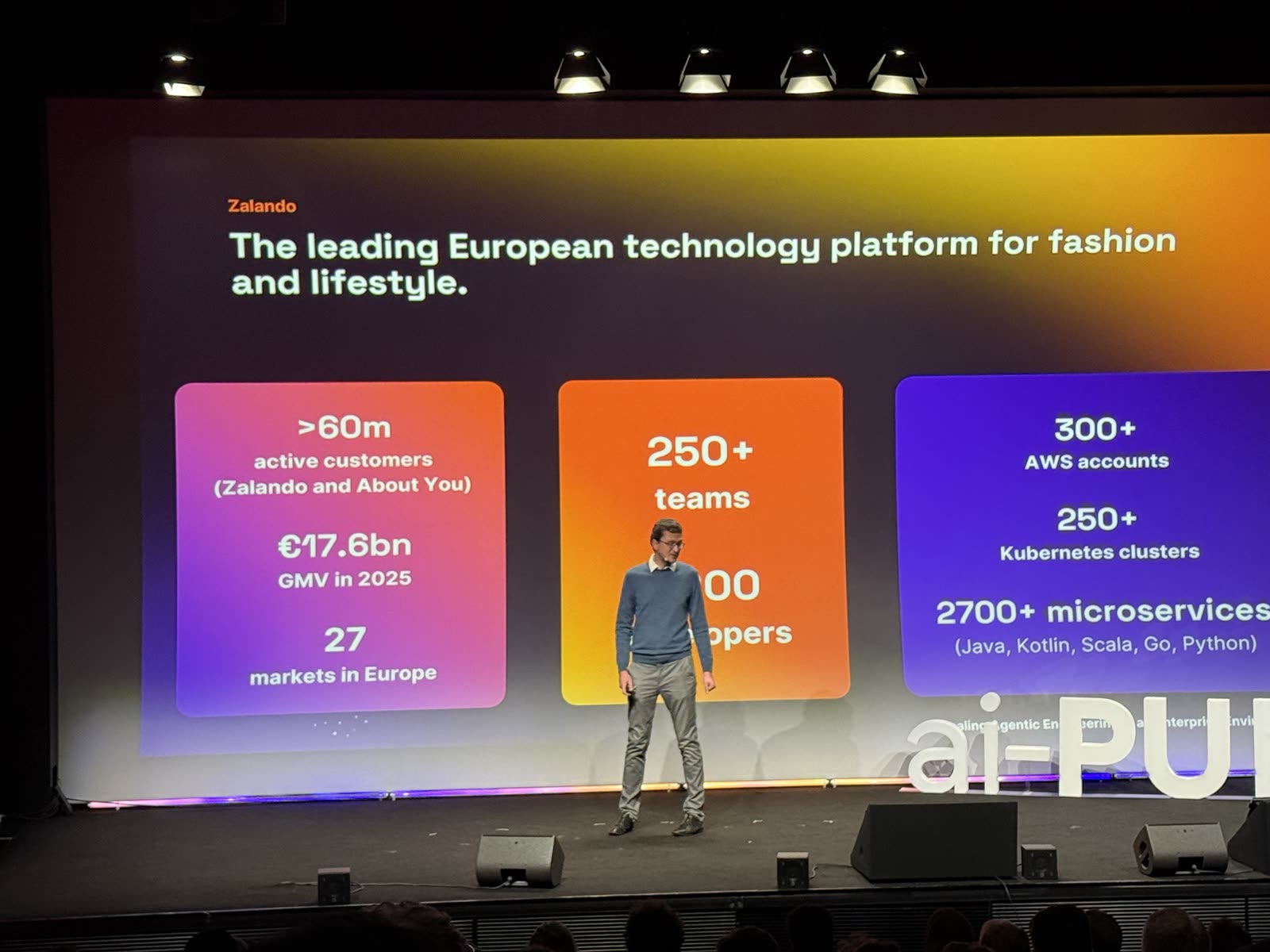
Zalando showed how they run agents across 2,700 microservices without handing out secrets everywhere. Their answer is open source and builds on RFC 8693.
But what interested me most was the engineering around it. AI is built into the way they make software, with explicit governance: a Tech Radar that says which tools and which models are allowed, and a legal review aligned with European regulation. Along the way, they shared measurements of what AI does to the size of pull requests.
→ Agent identity, a field still wide open
Also worth a mention
Fujitsu is working on nano computing to absorb agentic workloads in edge data centres: bringing compute closer to the data rather than sending everything up to a central platform.
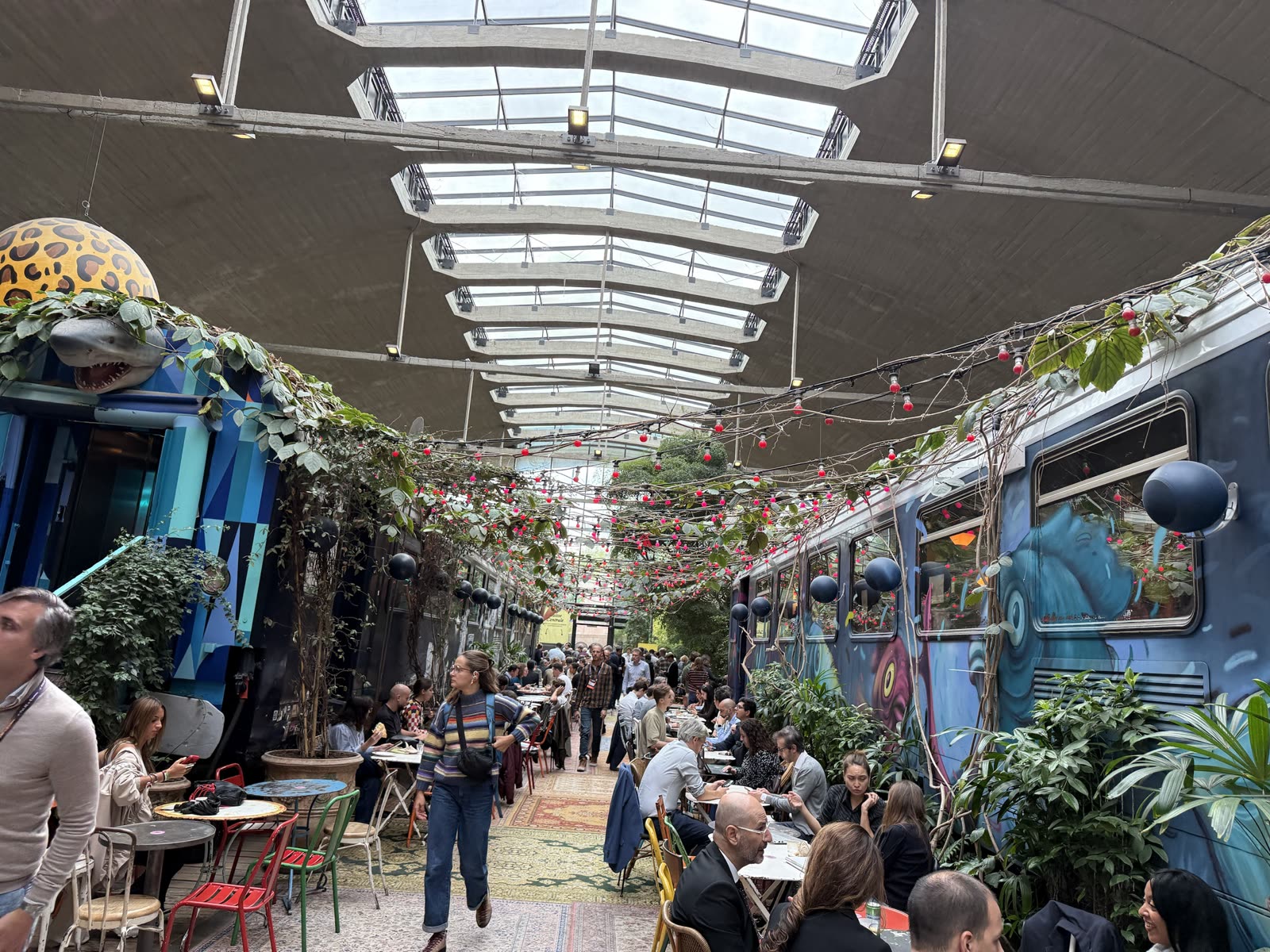
Lunch was in the wagon hall, between two converted old railway carriages. A nod to the building’s railway past.
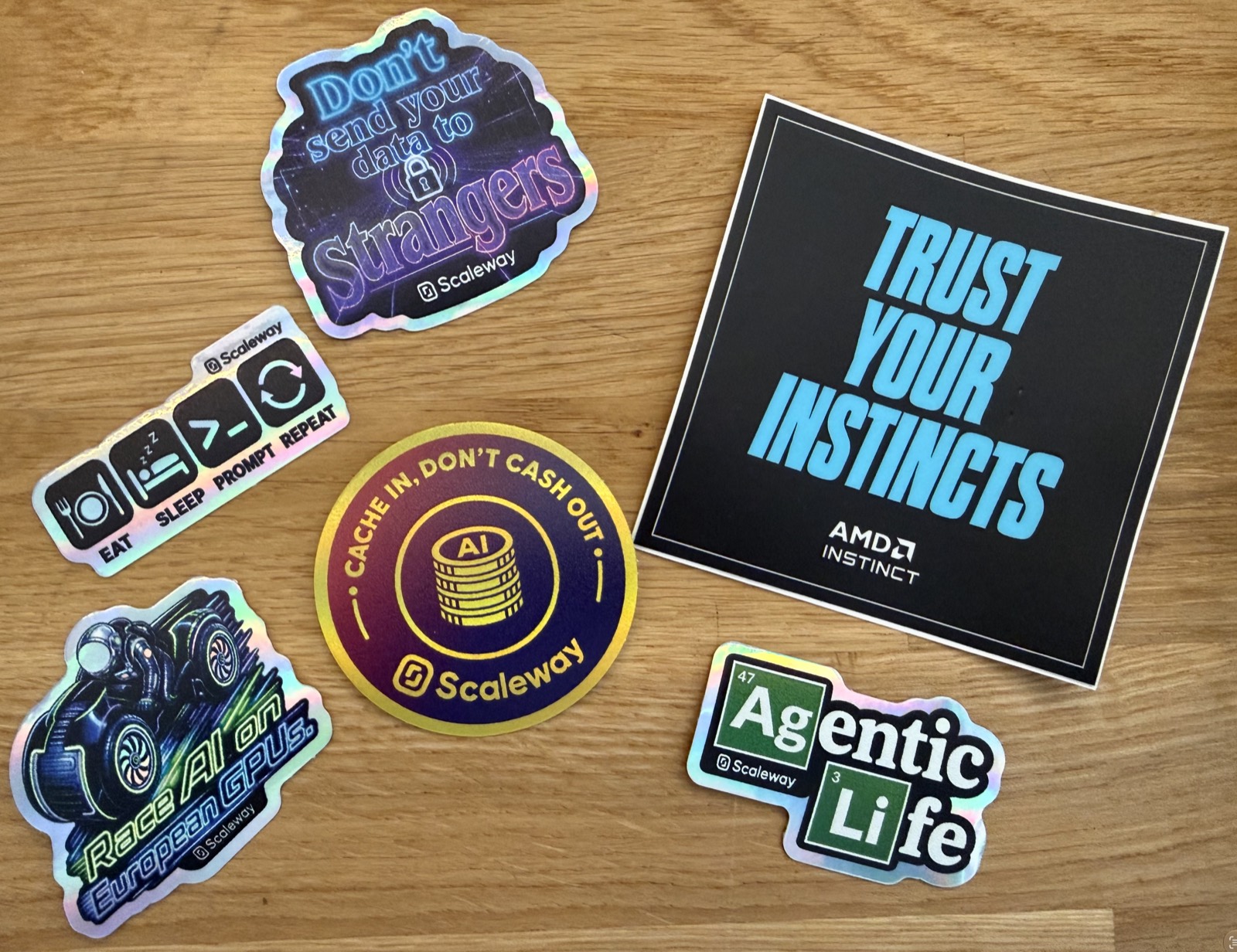
I came home with a few stickers. Their slogans sum up the day quite well: “Don’t send your data to strangers”, “Race AI on European GPUs”, “Cache in, don’t cash out” from Scaleway, and “Trust your Instincts” from AMD.
What I take away, in one sentence
Models are no longer the point. What makes the difference is what you put around them: tooling, identity, orchestration, and the ability to switch providers without rewriting everything. It is also, incidentally, the only layer where Europe can still compete.